Author: sdhakad

Treatment Water Activator (TWA) – Advanced Water Treatment Technology

The Treatment Water Activator (TWA) is a Novel catalytic treatment process that treats and rejuvenates water using advanced green, non-biological, and non-chemical technology. It employs specialized catalyst balls that release negative ions, breaking H–O–H bonds to form ultra-small water molecules. Applicable from drinking water to industrial wastewater, TWA delivers consistent water quality while minimizing environmental impact.

Applications in the Petroleum Sector Effluent Treatment Plants (ETP / CETP)

  • Treatment of non-biodegradable COD
  • Reduction and Removal of Ammonia Concentration that leads to disruption of biological treatment process
  • Reduction and removal of oil & grease, suspended solids, and heavy metals.

Cooling Water Systems & Boiler Feed Water Treatment

  • Neutralization of silica and hardness analytes and conversion of same from reactive crystalline to non-reactive neutralized soft neutralized suspended solids.
  • Prevention of biofouling and improving efficiency.
  • Enhancing life of SS Pipes and Heat Exchanges
  • Reduction in make up water

Membrane-Based Treatment Units (UF, NF, RO)

  • Protection against silica tear-off
  • Prevention of hardness fouling and biofouling in pre-treatment and desalination plants.

Refinery Process Water Systems

  • Treatment of process water streams for reuse.
  • Reduction of fouling agents in heat exchangers and process cooling circuits.
  • Cleaning of Process Pipes against corrosion removal

Zero Liquid Discharge (ZLD) Systems

  • Enhancing performance of multi-effect evaporators (MEE) and crystallizers.
  • Reducing scaling and extending equipment life.

Successful Implementations

IndustryMajor Treated Pollutants
Lloyds Metals & Energy, Gadchiroli, MaharashtraIron
Koperkhairne, NMMC, MaharashtraLake water treatment
CBD, Belapur, NMMC, MaharashtraSecondary sewage treatment
SAIL, Rourkela, Odisha (Trial)Iron & Heavy Metals
Tata Steel, Sukinda Chromite Mine, Odisha (Trial)Hexavalent Chromium (Cr6+)
Emmvee Photovoltaic, Bengaluru, Karnataka (Trial)Ammonia
KIADB, Bengaluru, Karnataka (Trial)Silica in CETP Effluent
Karnataka Gas Power, Bidadi (Trial)STP, Leachate, Bottom Ash water
Textile Industries in Ludhiana, Punjab (Trial)COD & Turbidity

Advantages of TWA Over Conventional Technologies

  • Land requirement – requires one-third the land area compare to conventional technologies.
  • Reduced operational cost – up to 50% lower OPEX, no chemicals or sludge handling.
  • Lower capital cost – approximately 10% less than conventional plants.
  • Minimal or no sludge generation; mineral sludge safe for TCLP disposal.
  • Fully automated, requires minimal manpower and no skilled operators.
  • Stabilizes pH and improves effluent quality consistently.
  • Versatile – treats multiple organic and inorganic pollutants simultaneously.
  • Oil tolerance – unaffected by high emulsified oil or non-polar analytes.
  • Scalable – available from 50 KLD to 100 MLD.

TWA provides a next-generation, sustainable effluent treatment solution that is compact, cost-effective, and reliable. Using TWA technology improves cooling efficiency, extends equipment life, and reduces maintenance requirements. By eliminating reliance on biological or chemical processes, it minimizes sludge generation, ensures consistent effluent quality, and delivers versatile treatment across a wide range of industrial applications, including the petroleum sector.

Gen Clean Disinfectant – Sea Water Pre-Treatment Process

  • NSF-certified advanced oxidation technology designed for commercial, industrial, and municipal water treatment.
  • ~4× stronger oxidizer than chlorine and ozone; stable for 6 months without loss of oxidation strength.
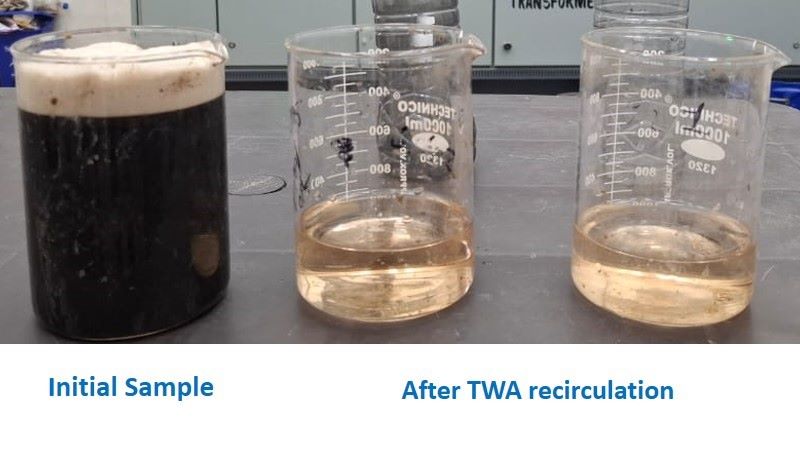
  • Reduction efficiency depends on recirculating reaction time and dosage concentration.
    Disinfection and oxidation effectiveness strongly correlates with ORP range.
  • Targets wide contaminants:
    • Color, BOD, COD, trace organics/metals
    • Microbiological contaminants: IRBs, SRBs, Legionella, viruses, algae, fungi, cysts (3–6 log reduction)
    • Hydrogen sulfide (H₂S)
  • Typical dosing requirements:
    • Inorganics: <1 mg/L per mg/L of inorganic compound
    • Microbial pathogens: 1 mg/L per 1,050–10,000 mg/L of pathogen
    • Organics: 1–8 mg/L per mg/L of organic compound
    • BOD/COD: 1 mg/L per 5–14 mg/L of COD
    • H₂S, Mn, Fe: 1 mg/L per 2 mg/L of H₂S

NSF 60 Bio-Flocculation

While the treated water with neutral colloids are still existing in the water to be treated post catalyst interaction, this needs to be removed with maximum clarification efficiency

NSF 60 Certified Zeo Turbo Bio-Flocculant is the ideal Selection as this flocculates all the colloids including neutralized colloids in four different ways.

  1. Charged Neutralization
  2. Sweep Coagulation
  3. Bridging
  4. Patch Flocculation

Derived from Deep Sea plants, Creates No Bi-Products and safe for even drinking
Water. Generates sludge that is only created to polluting analytes. No extra
sludge. Sludge concentration 1/10th that of generated by other Biological systems
Or synthetic Poly . Generated sludge is also safe for disposal under TCLP Protocol.

Atlantium UV

Where microbiological safety and chemical-free disinfection are required, UV treatment is used as an additional technology along with TWA Catalyst.

ATLANTIUM HODTM (Hydro-Optic Disinfection) UV is the ideal selection as it:

  • Provides a physical, non-chemical disinfection process that exposes bacteria, viruses and protozoa to germicidal UV light so they cannot reproduce, with no residual chemicals left in the water.
  • Uses medium-pressure, high-intensity UV lamps that emit a broad germicidal spectrum (≈200–415 nm), delivering high microbial inactivation with fewer lamps per system.
  • Employs a quartz Hydro-Optic chamber with Total Internal Reflection (TIR) that recycles UV light, gives a homogeneous UV dose and improves power efficiency versus conventional UV systems.
  • Continuously monitors UVT, flow and lamp intensity, auto-adjusting UV dose in real time and logging data to ensure the required disinfection level is always met.

Small-footprint inline system with a quartz disinfection chamber and extra-thick sleeves, reduced lamp-related maintenance, quick lamp replacement and advanced real-time monitoring / reporting, providing a reliable, validated UV barrier for critical water applications.

Supratec UF

Where extremely low turbidity and microbiological safety are required, membrane treatment is used as an additional technology along with TWA Catalyst

SUPRATEC UF is the ideal selection as it:

  • Provides an ultrafiltration barrier to remove fine suspended solids, bacteria and many viruses.
  • Combines biological treatment and solid–liquid separation in a single compact module.
  • Operates at high flux with low specific energy consumption through optimized aeration.
  • Uses automatic backwash and chemical cleaning to maintain stable performance with minimal operator effort.

Modular skid-mounted design, smaller footprint than conventional clarifier + filter trains, reduced chemical demand and sludge generation, and consistently clear permeate suitable for high-value reuse applications.

Trial at Petroleum Refinery

Trial Date – 28.11.25 – R.O. Reject Water

ParameterInletOutletRemoval (%)
Colour (APHA)581771%
Phosphates (mg/L)27.65.182%
Alkalinity (mg/L)90035261%
TSS (mg/L)3167%

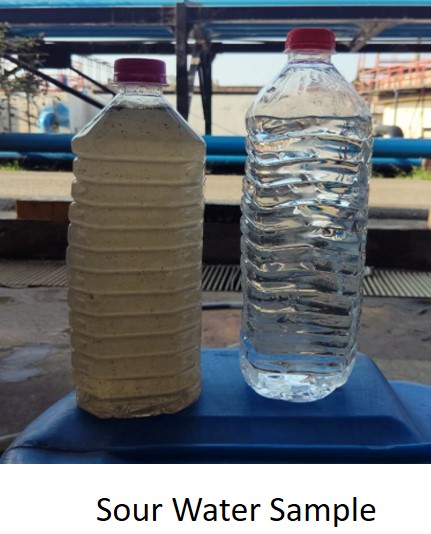
Trial Date – 29.11.25 – Sour Water Sample 

ParameterInletOutletRemoval (%)
Colour (APHA)1656958
Oil & Grease  (mg/L)17<4~76%
Ammonia (mg/l)631~98%
TSS (mg/L)32197%

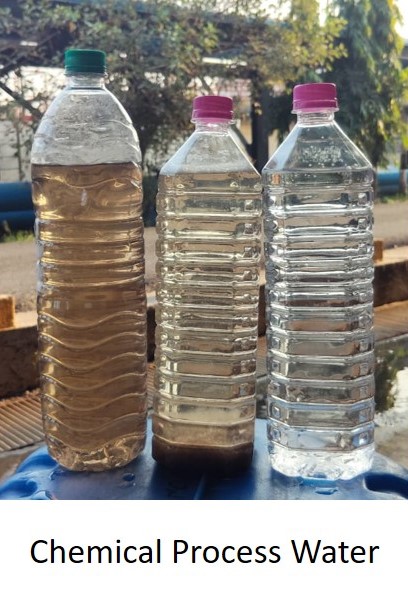
Trial Date – 01.12.25 – Chemical Process Water

ParameterInletOutletRemoval (%)
Ammonia (mg/l)5514.674%
Oil & Grease (mg/l)44.81~98%
Total Silica (mg/L)16.14.970%
TSS (mg/L)74397%
Turbidity (NTU)883.296%

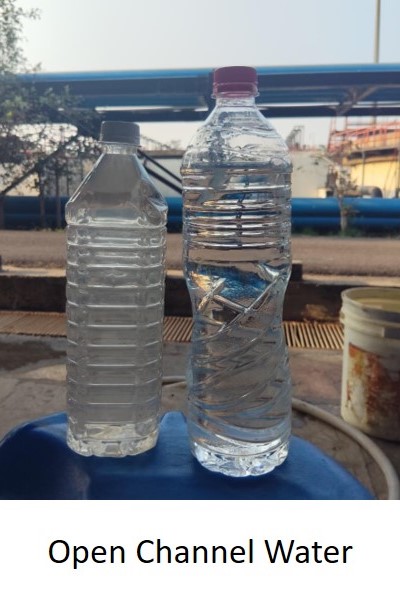
Trial Date – 02.12.25 – Open Channel Water

ParameterInletOutletRemoval (%)
Turbidity (NTU)16.42.585%
Oil & Grease (mg/L)2.61.254%
Iron as Fe (mg/L)0.3<0.02~93%
TSS (mg/L)3167%

Trial at Oxo-Alcohol Unit

Trial Date – 17th November 2025 (TWA Only)

ParameterInletOutletRemoval (%)
pH4.427.89–
Color (Hazen)6584135~98%
COD (mg/L)10593413361%
TSS (mg/L)1061883%

Trial Date – 18th November 2025 (TWA + Activated Carbon Filter)

ParameterInletOutletRemoval (%)
pH4.338.59–
Color (Hazen)680811298.35%
COD (mg/L)11733207182%
TSS (mg/L)1062081%

Tata Mines (Chromite Division), Odisha

Cr⁶⁺ Neutralization & Mine-Water Reuse

Water Type: Chromite mine runoff, pit water, and drainage

Performance Highlights (from calibration & third-party validation):

  • Hexavalent Chromium (Cr⁶⁺) neutralization and removal
  • Turbidity reduction
  • Temporary Hardness
  • Metals (Fe, Mn) reduction & removal
  • Sludge: TCLP-compliant for safe handling/disposal; low generation rate
  • Operations: low-energy footprint; treatment performance unaffected by trace oil/emulsions

SAIL, Odisha

Water Types Covered:

  • River Water — Hilltop WTP intake
  • Mine Water — Mines ZLD circuit
  • ETP Water — Lagoon Pumping Station

Performance Highlights:

  • Organic load (COD/BOD) and inorganics (incl. heavy metals, hardness) significantly reduced across all streams
  • Mine Water & ETP Water treated to discharge-compliant quality
  • River Water improved to drinking-water
  • Treatment performance unaffected by oil/emulsified hydrocarbons or load variability
  • Negligible sludge generation; low energy footprint → strong operating economics